📄 Digital book in PDF · read it on your phone or print it
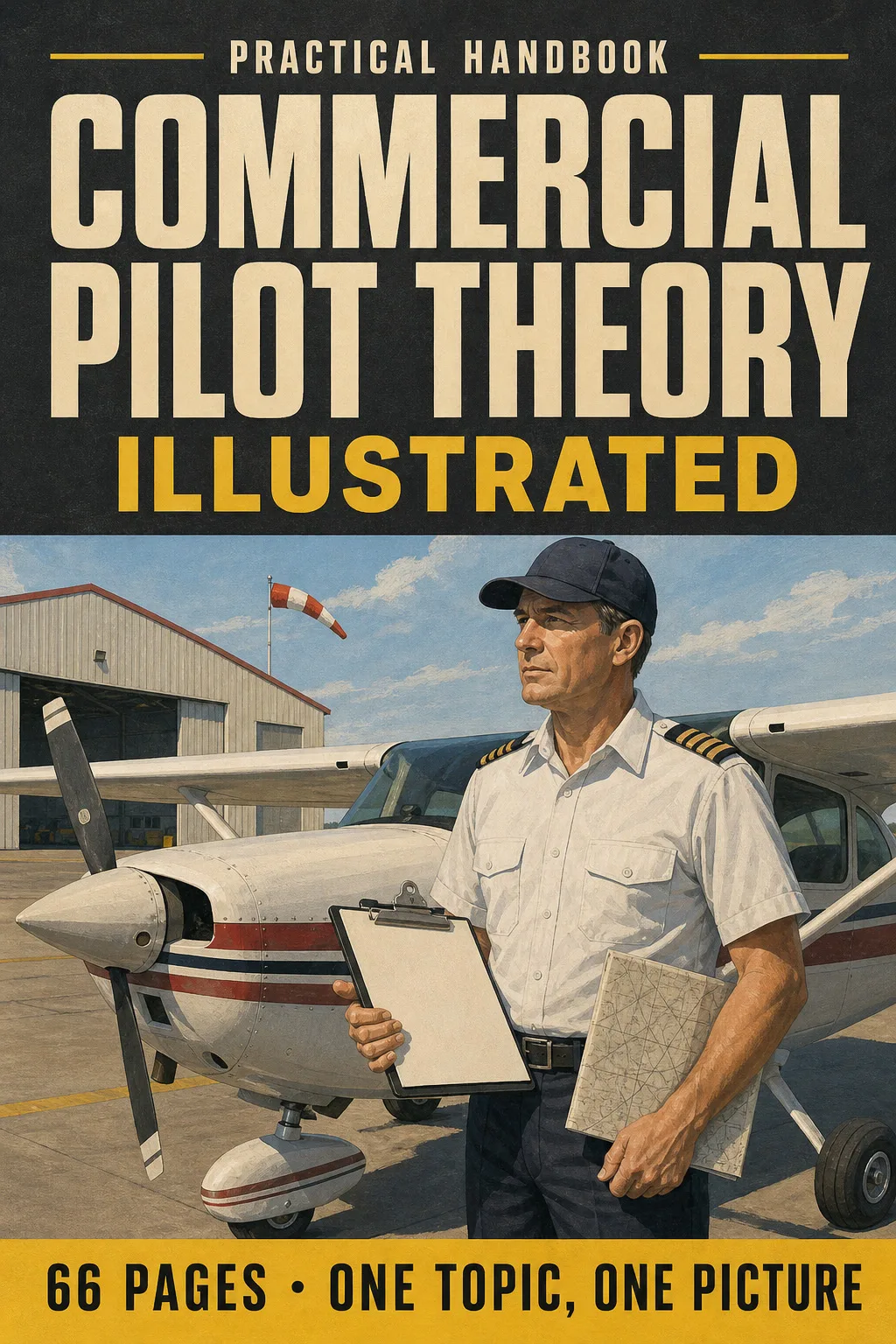
Airspace, VFR weather minima, the pitot-static system, fronts, the METAR and TAF, the wind triangle, weight and balance and density altitude. Written for Canada: the CARs, Canadian airspace, the GFA and the CFS. One topic per page, the drawing first and then the numbers to remember, to review beside your ground school manuals. 66 illustrated pages.
🔒 Secure checkout · PDF by email · 30-day guarantee
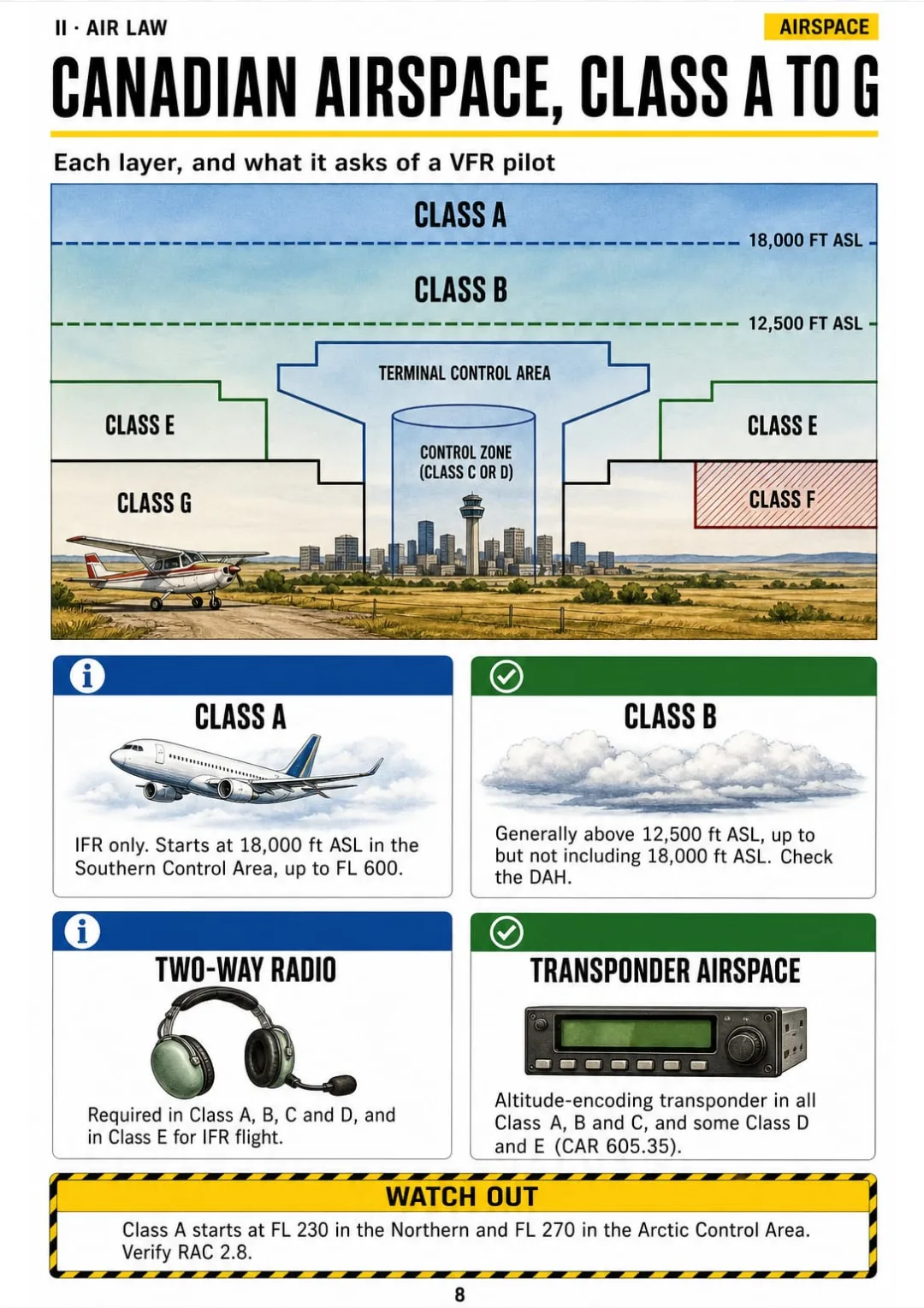
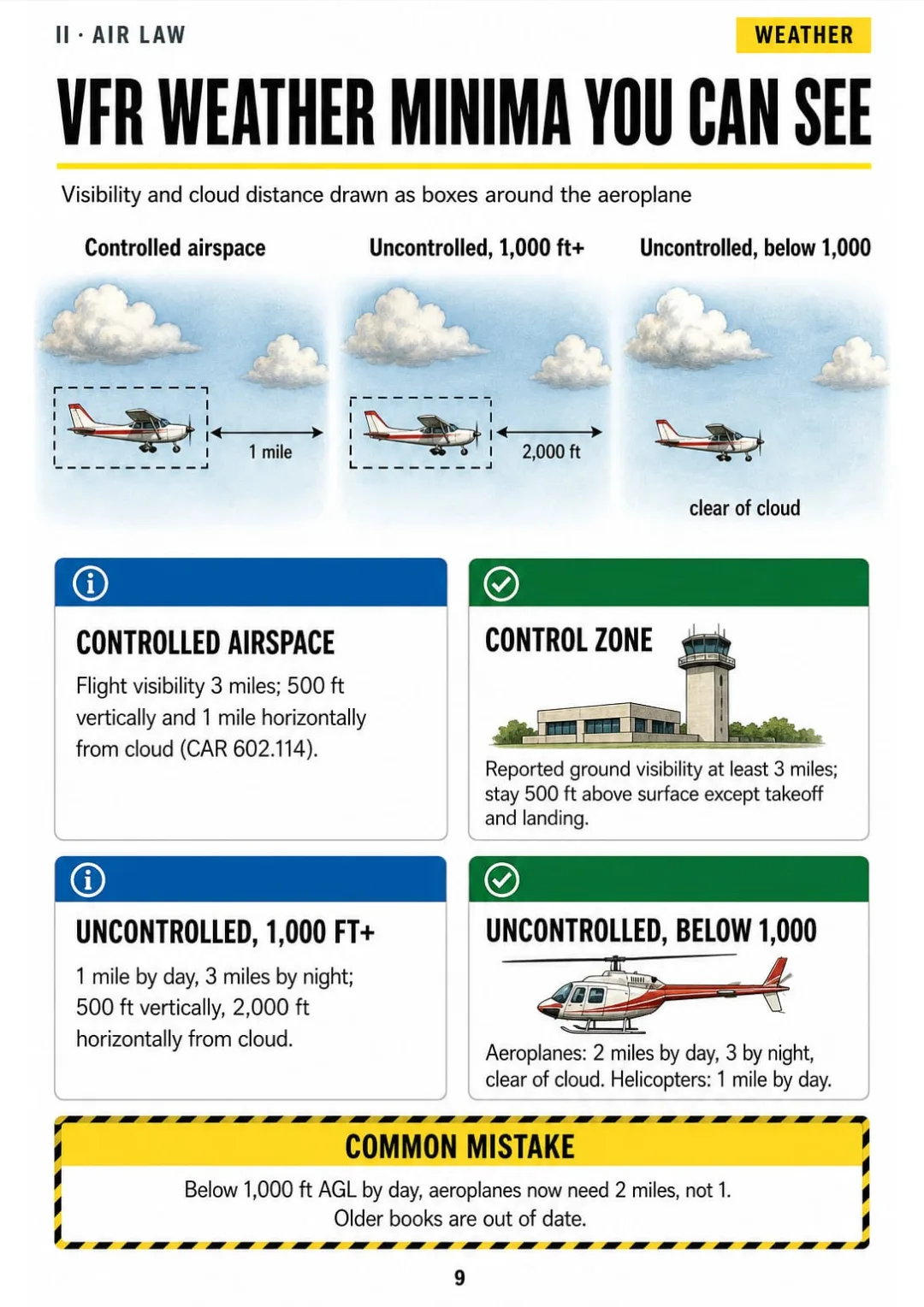
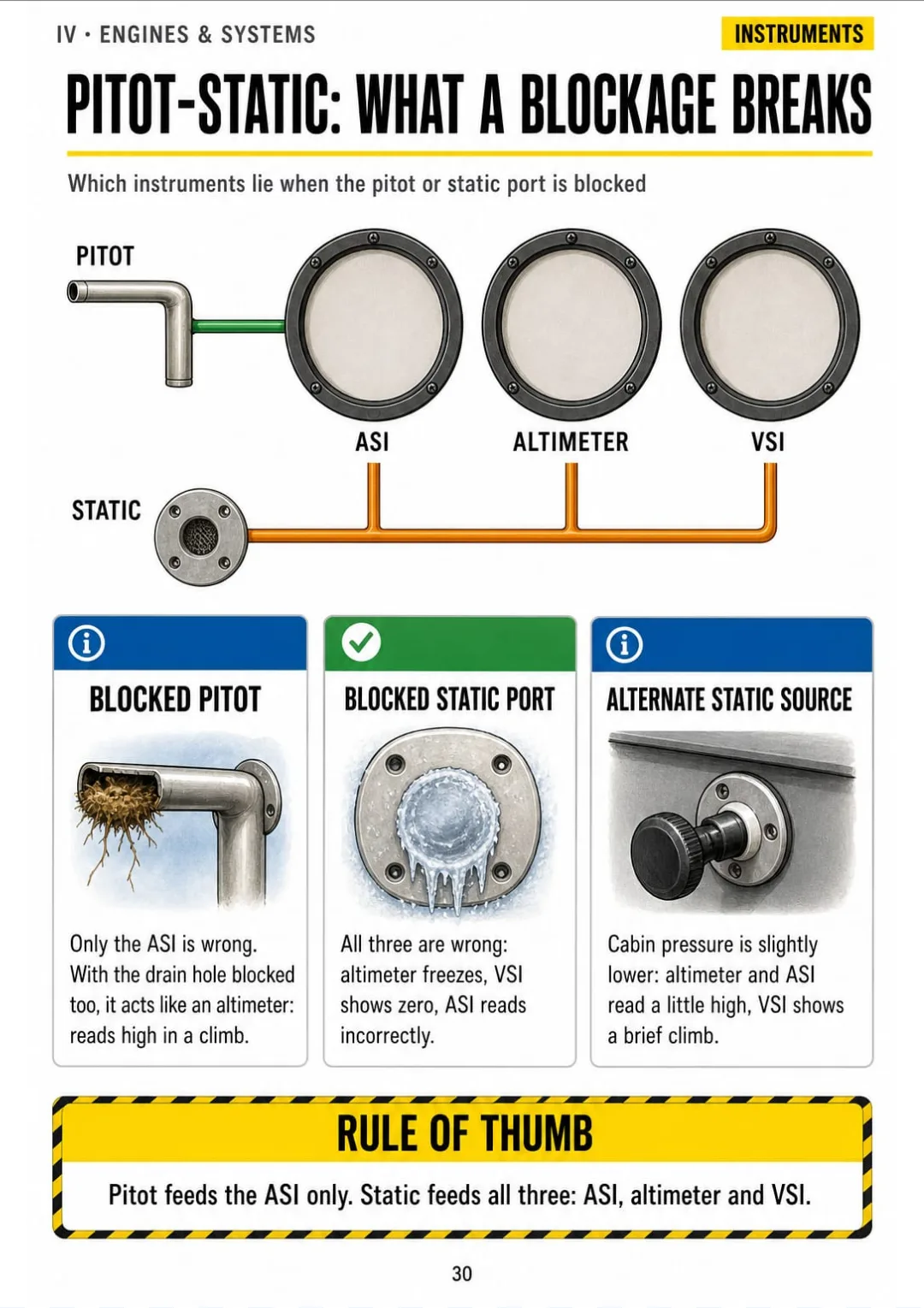
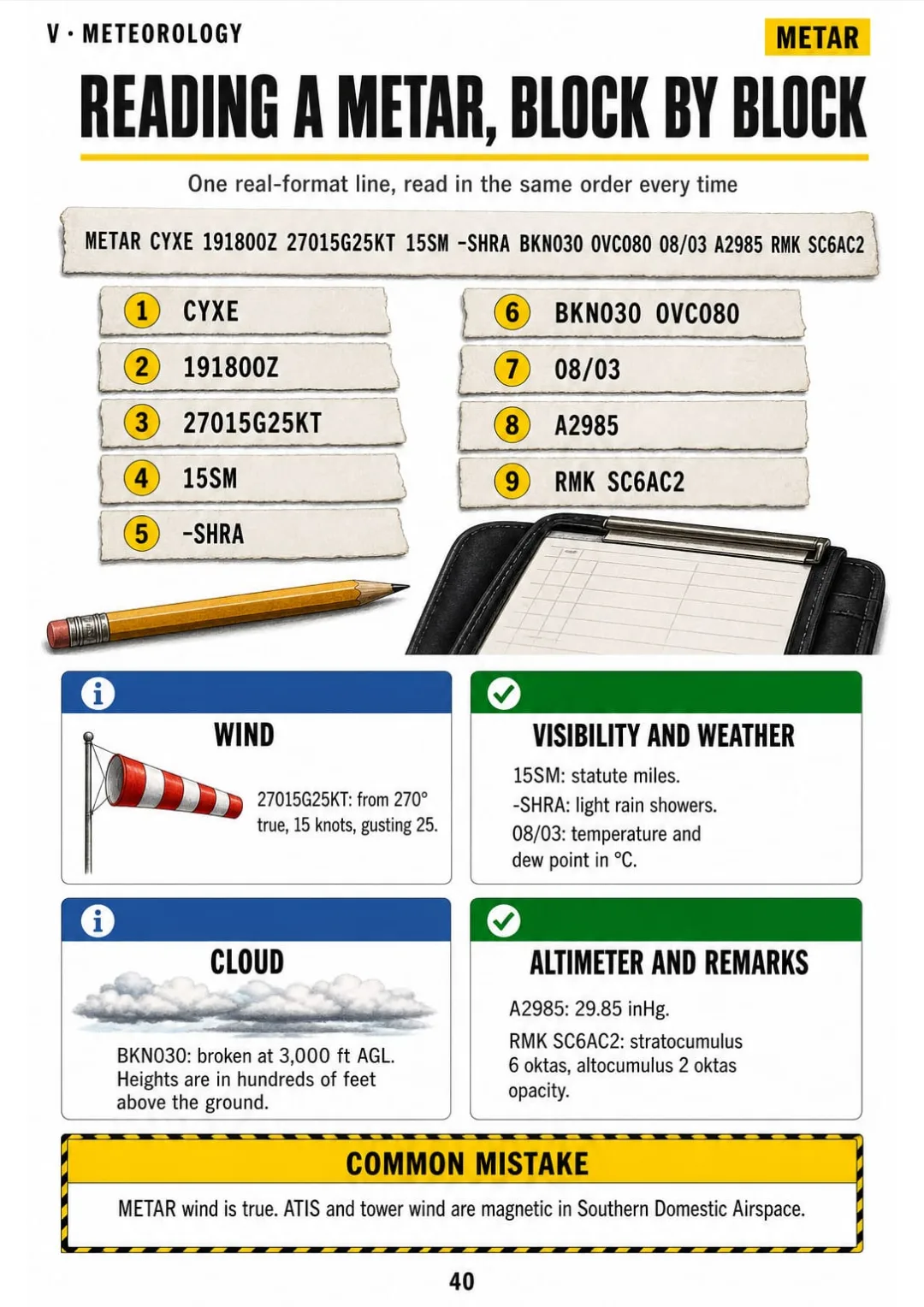
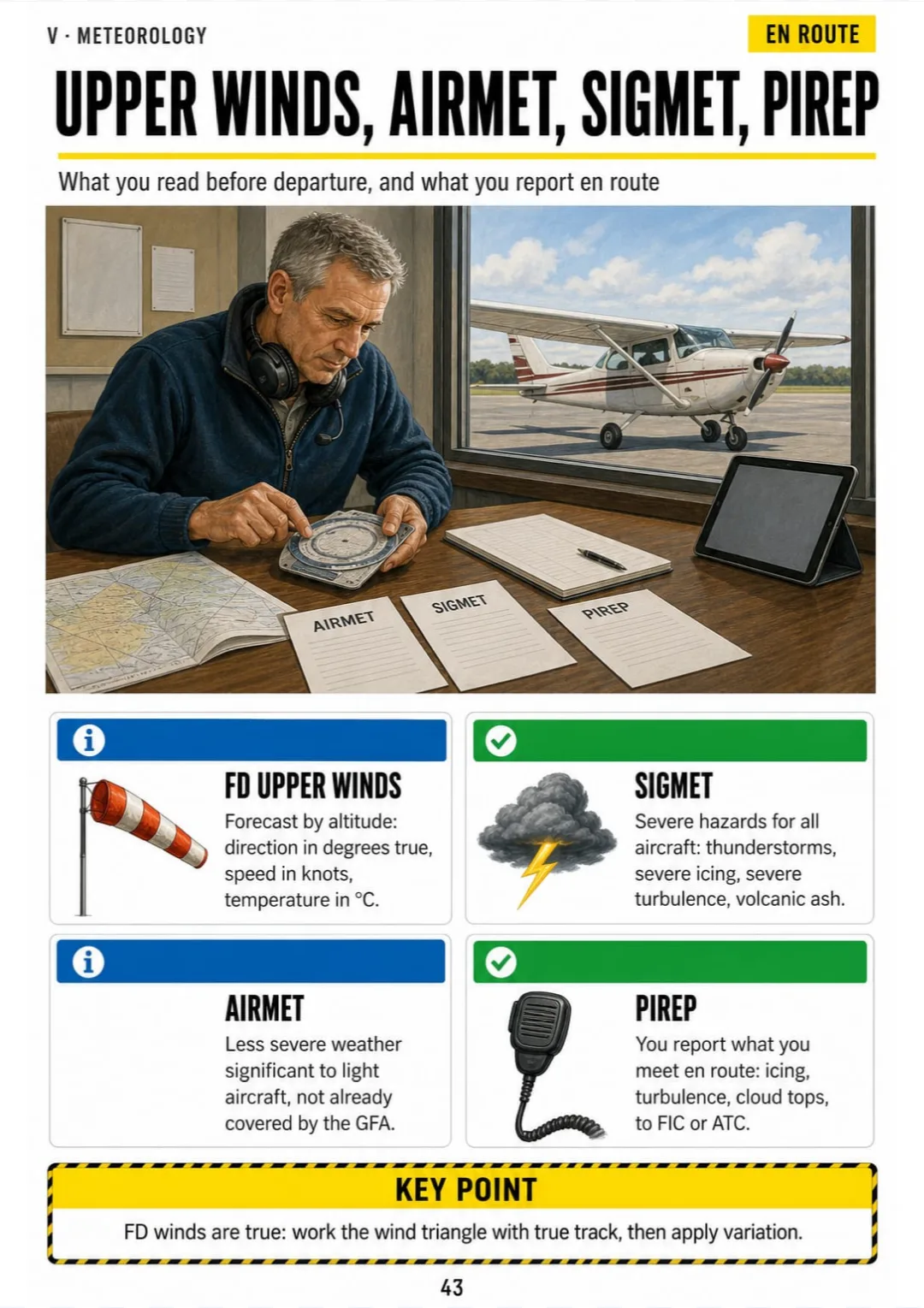
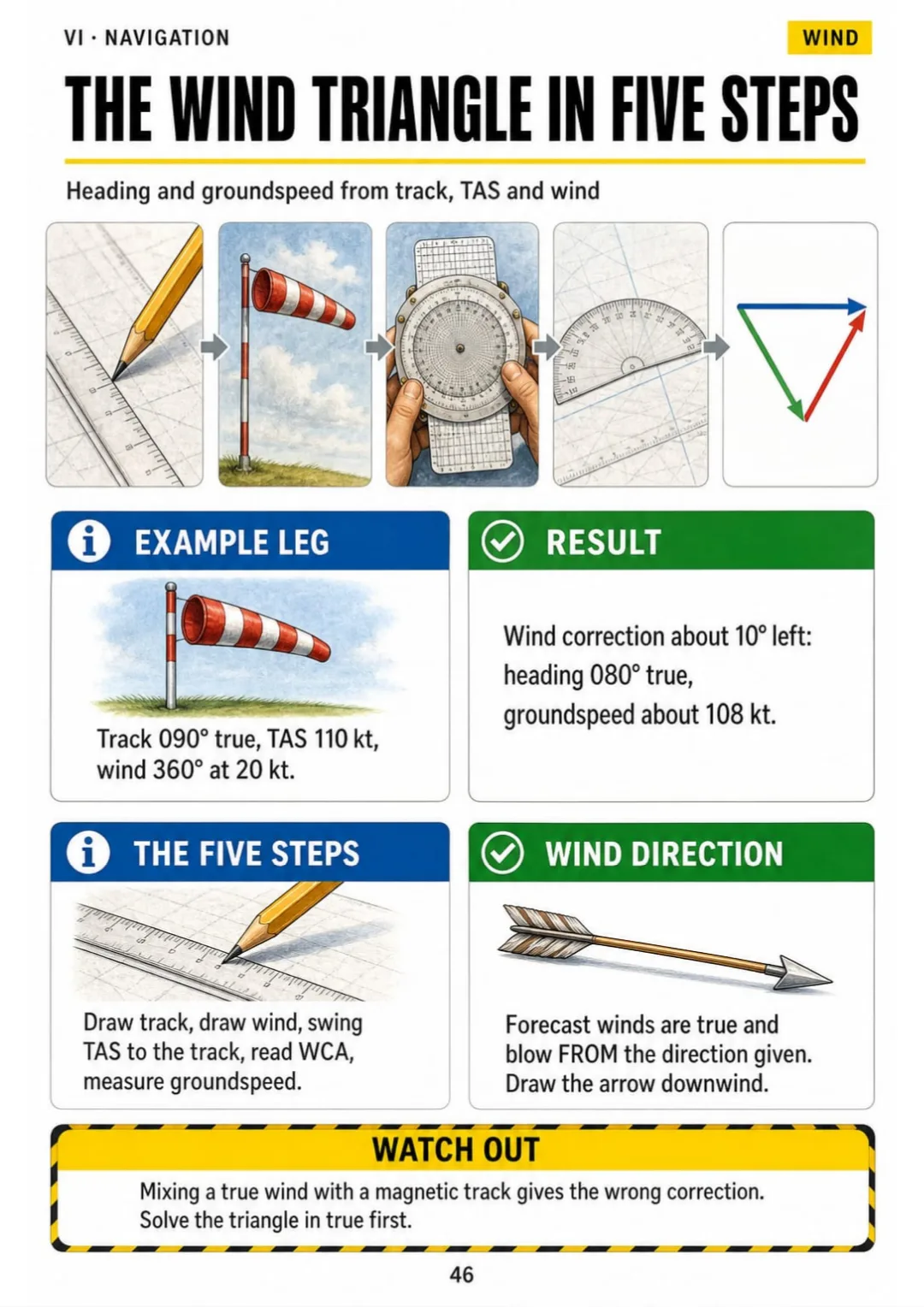
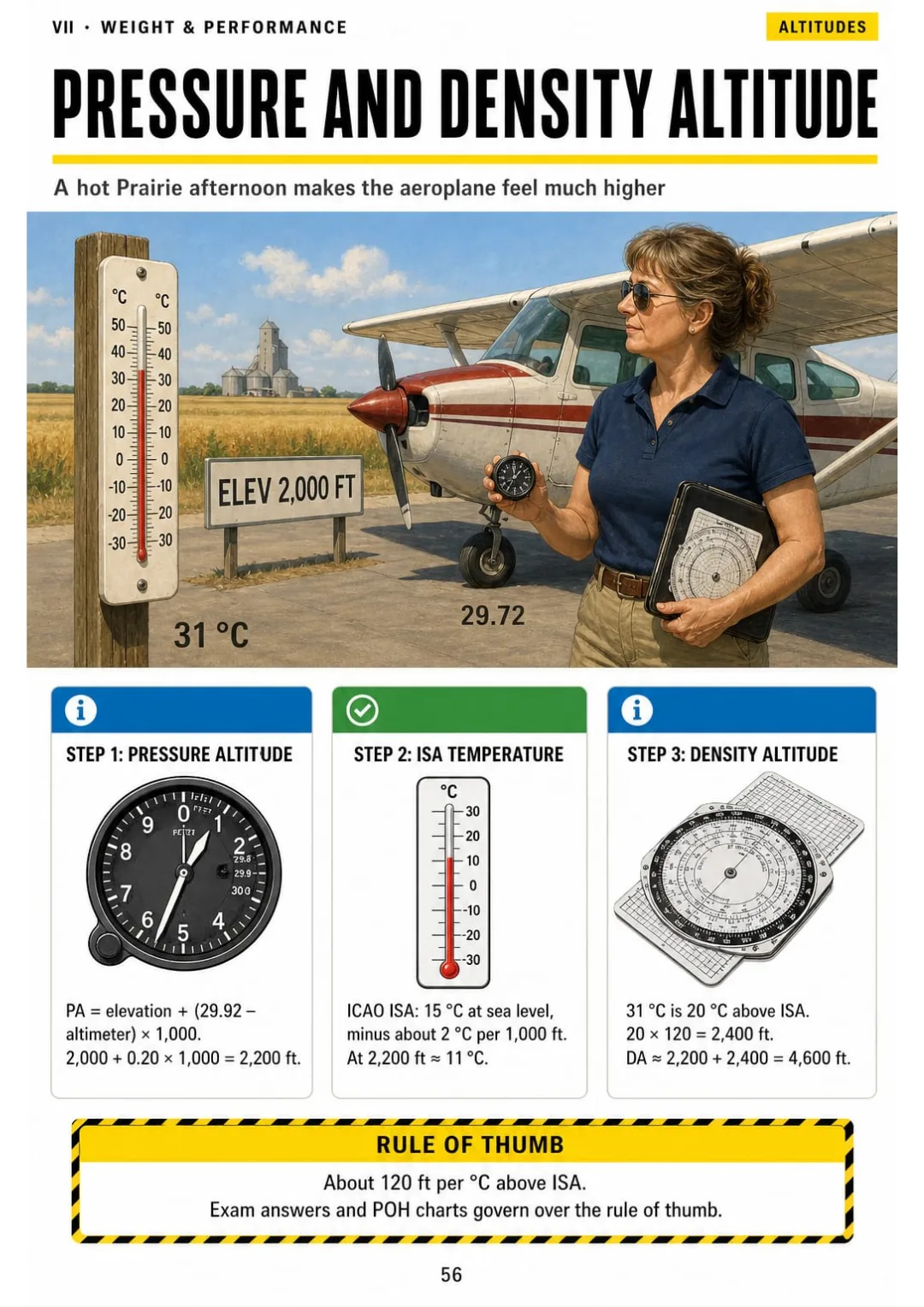
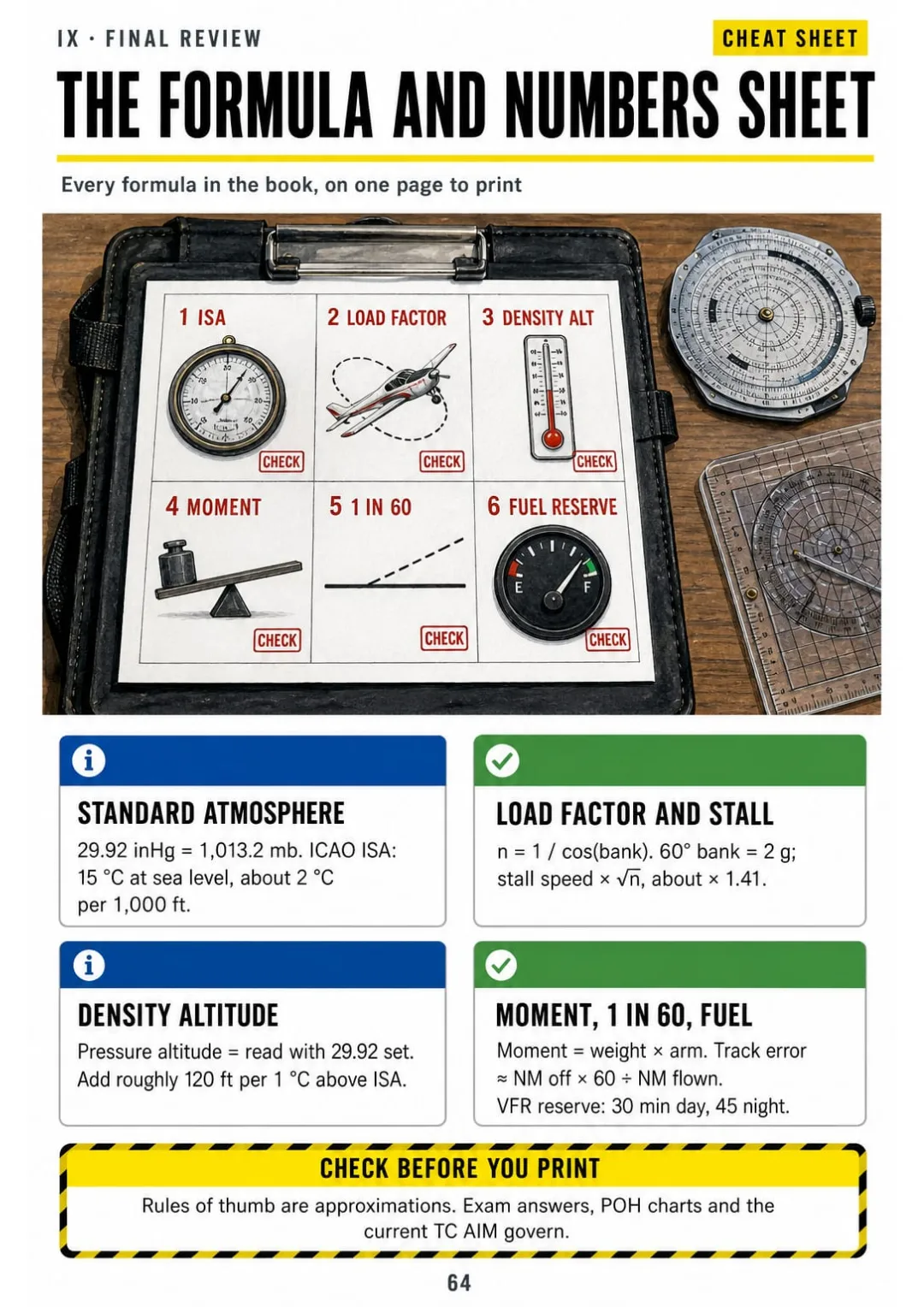
Each page has one large drawing and a box with the numbers and steps you need to know:


Swipe to see more →
These are real pages from the book. The table of contents is the full one: 9 parts and 62 topics.
You're on a practice question. Climbing through cloud, the airspeed starts reading oddly, and you have to say which line is blocked and what else stops working.
You've studied it. But the manual gives the pitot-static system four paragraphs and one small diagram, so pitot, static, ASI, altimeter and VSI all blur into one sentence.

In this book the same system is a cutaway drawing: the pitot tube feeding only the airspeed indicator, the static port feeding three instruments, and the alternate static source marked "reads slightly high".
Canadian airspace, VFR minima, fronts, the METAR and the wind triangle get the same treatment: one topic, one page, one drawing.
You see which instrument fails and why, and you answer without going back to the manual.

How the written works, air law, aerodynamics, engines and instruments, meteorology, navigation, weight, balance and performance, human factors and a final review: 66 pages, all illustrated.
Think of it this way:
It's the week before the written. A practice question gives you an aerodrome elevation, an altimeter setting and a hot afternoon, and you need the density altitude before you can even read the takeoff chart.
You open the page on pressure and density altitude and it's drawn: pressure altitude first from the altimeter setting, then about 120 ft for every degree above ISA, with a worked example beside it.

The same goes for Class A to G airspace, VFR weather minima, fronts in cross-section, the METAR and the wind triangle: each one on its own page.
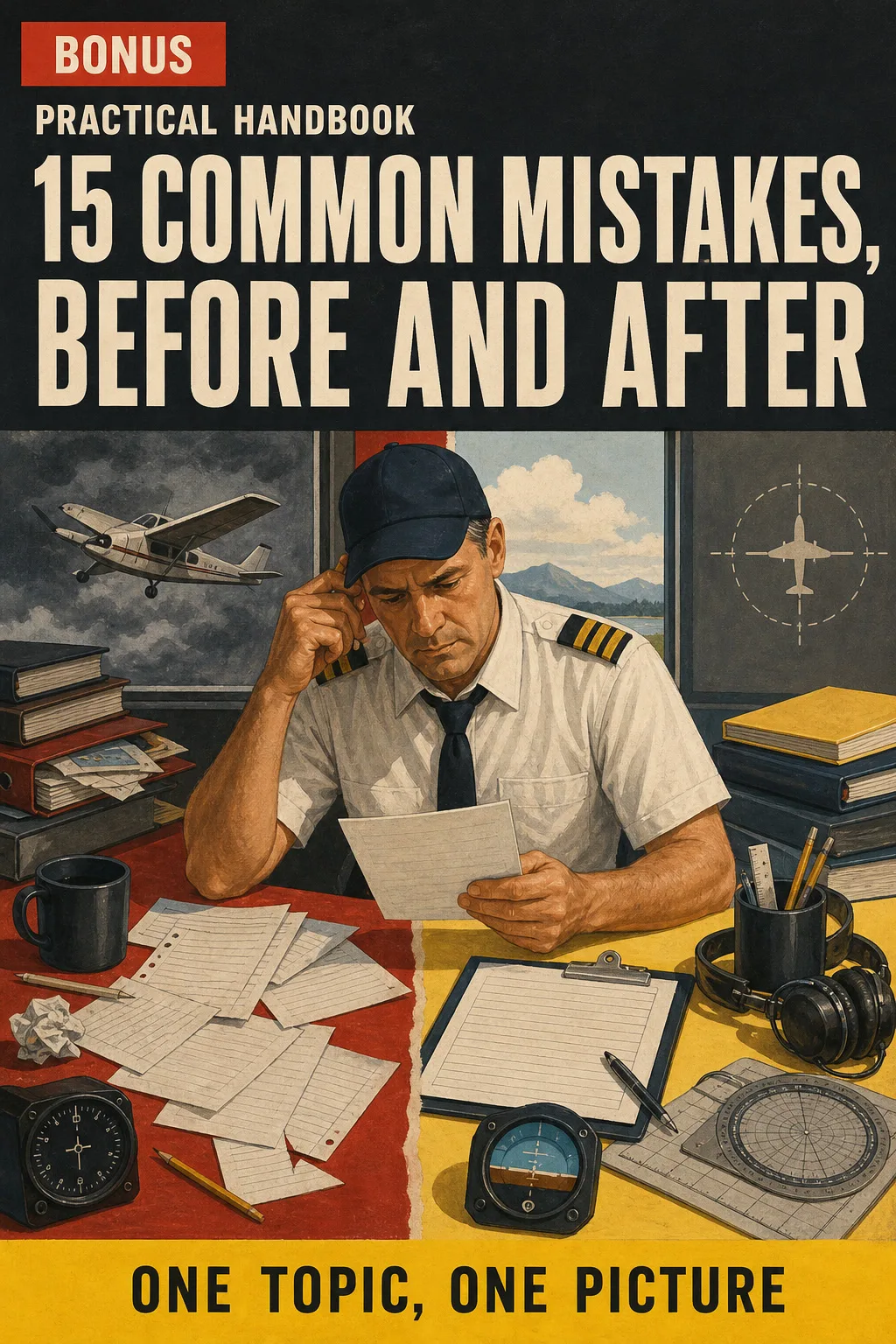
Commercial Pilot Theory Illustrated is 66 pages: 9 parts and 62 topics, all drawn, with a formula and numbers sheet and an exam-day checklist at the end. The practice questions and the 15 common mistakes come as 2 separate bonus books.
What you see drawn, you don't have to memorize.
What the commercial written covers, what changes from the PPL to the CPL, and the same-order method used for every calculation.
Canadian airspace Class A to G, VFR weather minima, altimeter setting regions, cruising altitudes, right of way, fuel, pilot fitness, documents, ELT, transponder codes and the CFS.
The four forces, angle of attack, drag and L/D max, load factor in a turn, manoeuvring speed, stability, left-turning tendencies, ground effect, Vx and Vy.
The constant-speed propeller, manifold pressure, mixture and detonation, carburettor icing, the pitot-static system in cutaway, gyros, compass errors and the electrical system.
The standard atmosphere, stability, air masses and fronts, thunderstorms, icing, fog, the Canadian METAR, TAF and GFA, upper winds, AIRMET, SIGMET and PIREP.
VNC and VTA charts, headings, the wind triangle in fixed steps, time, speed, distance and fuel, the 1 in 60 rule, VOR, NDB, GNSS, DME and lost communications.
Weight, arm and moment and a full loading worked step by step, so the CG comes out the same every time; moving weight, burning fuel, density altitude, takeoff charts and wind components, each in fixed steps.
Hypoxia, spatial disorientation and illusions, decision-making and fatigue, wake turbulence and wind shear.
The formula and numbers sheet, frequent mistakes in the four subject areas and the checklist for exam day.
At the end of the book: A formula and numbers sheet, the frequent mistakes in the four subject areas and an exam-day checklist.
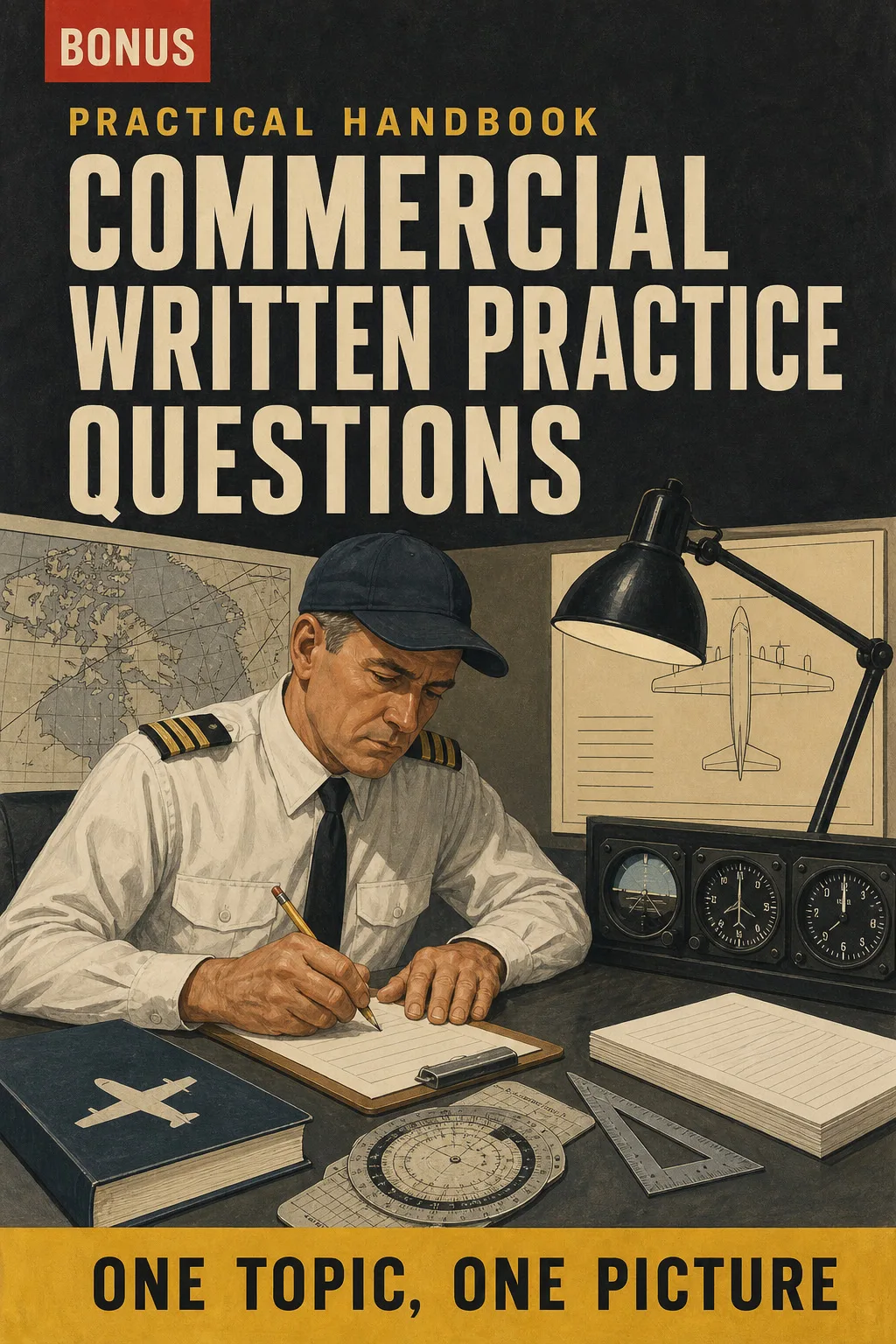
Exam-style multiple-choice questions grouped by subject area, each with the answer and a one-line reason, so you can see which areas need another look before the written.

The mistakes made most often in wind triangles, weight and balance, density altitude and METAR reading, each shown wrong and then right on one page.
📄 This is a digital PDF book sent to your email: nothing is printed or shipped.
PDF by email: We email you Commercial Pilot Theory Illustrated as a PDF, together with the two free books. It's a single payment: no installments, no extra charges.
Each lesson has a drawn page to come back to after class, so your evening study goes into one place instead of three manuals.
You review one subject area at a time and redo each calculation in the same steps until it comes out the same way every time.
You fill the gap between the PPL and the CPL (performance, systems, weight and balance) and see why the numbers come out the way they do.
📄 This is a digital PDF book sent to your email: nothing is printed or shipped.
Try Commercial Pilot Theory Illustrated for 30 days, bonus books included.
We refund everything if the file won't open, if the book isn't what you see here, if you were charged twice or if the email doesn't arrive. Just email us.
You pay once. No subscriptions.
Yes. It covers the whole commercial written, so you can skip what you know and spend your time on what changes: performance, systems, weight and balance and the air law you need for the CPL.
It's written for Canada, not adapted from an FAA book: Canadian airspace Class A to G, VFR minima from the CARs, METARs with visibility in statute miles, the GFA, the CFS and VNC/VTA charts. It's checked against the current edition of Transport Canada's study and reference guide for the commercial licence (TP 12881), the Canadian Aviation Regulations and the TC AIM, and each page names its source so you can check it against the official version. Regulations change: before the written, confirm any number against the latest TC AIM.
No. It's an independent study book. It isn't published, approved or endorsed by Transport Canada.
No. It doesn't replace ground school, flight training or the current official publications. It's a way to study and review what you learn there.
No. They're in the bonus book Commercial Written Practice Questions, written for this book in the style of the written and grouped by its four subject areas (air law, navigation, meteorology and aeronautics general knowledge), each with the answer and a one-line reason. They aren't official exam questions.
The book and the 2 bonus books arrive as PDFs by email, at the address you enter at checkout.
No. It's a one-time payment.
Yes. The PDF is laid out to print at home or at a print shop, so you can bring it to the flying club.
You have 30 days. We refund everything if the file won't open, if the book isn't what you see on this page, if you were charged twice or if the email doesn't arrive: just email us.
No more rereading without anything sticking.
Pitot, static and VFR minima: you see them drawn, and that's it.
You walk into the written knowing where everything is.
Drawings make studying faster.
The book is right below.
One-time payment: US$ 27 · Guarantee: 30 days · PDF by email
YES, I WANT COMMERCIAL PILOT THEORY ILLUSTRATED FOR US$ 27📄 This is a digital PDF book sent to your email: nothing is printed or shipped.